


Description
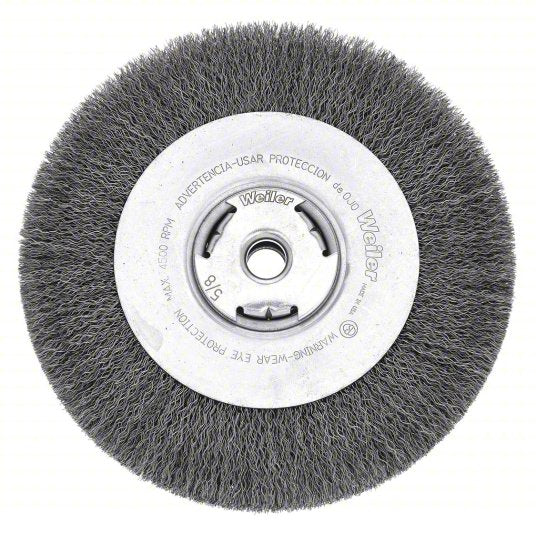
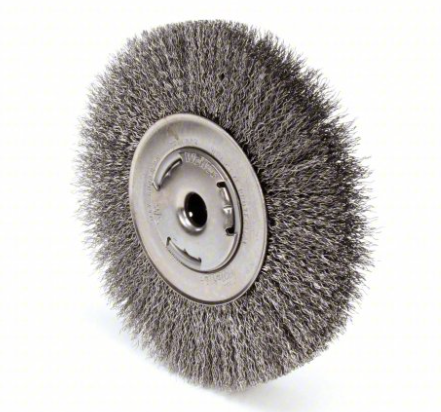
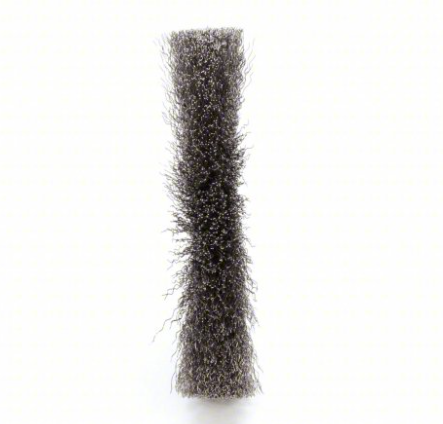
7" diameter, 5/8" arbor hole, .014'' bristle diameter - USA crimped wire wheel by WEILER. Crimped wire wheels feature individual filaments that are "waved" or crimped. This design allows the wires to support each other while remaining flexible.
What are the best uses of crimped wire wheels?
-
Light-to-Medium Surface Cleaning: Excellent for removing rust, scale, and light oxidation without gouging the base metal.
-
Deburring: Ideal for removing small burrs from edges, especially on parts with complex geometries where the brush needs to "hug" the surface.
-
Surface Finishing: Creating a uniform, matte, or brushed finish on metals (often used as a prep step before painting or plating).
-
Cleaning Irregular Shapes: Because the wires are flexible, they can reach into grooves, threads, and recessed areas more effectively than rigid knot-wire brushes.
-
Carbon Removal: Perfect for cleaning engine components or light weld spatter that hasn't fully fused.
What aren't the best uses of crimped wire wheels?
-
Heavy-Duty Material Removal: They lack the "impact" of knot-wire brushes. If you need to strip thick slag or heavy encrusted rust, a crimped wheel will just bounce off.
-
High-Heat Applications: Excessive pressure on a crimped wheel causes "wire fatigue." The wires will flex until they snap at the hub, leading to short tool life.
-
Wide Gaps/Deep Slots: While flexible, they aren't meant to "dig" like a grinding disc.
-
Precision Dimensioning: You cannot use a wire wheel to change the size or shape of a part; it is strictly for surface treatment.
FAQ
Why is my brush losing wires so fast?
Usually, this is due to excessive pressure. Users often push harder when the brush isn't cutting, which causes the wires to overheat and snap at the "stress point" near the hub. Let the tips of the wire do the work.
How do I choose between Carbon Steel and Stainless Steel wire?
It depends on your workpiece. Never use a carbon steel brush on stainless steel, as it will leave "after-rust" (carbon deposits) that will eventually corrode the stainless surface. Always match the wire type to the base metal.
What is the 'Long Trim' vs. 'Short Trim' difference?
Long trim is more flexible, follows contours better, but is less aggressive. Short trim is stiffer, faster-acting, and better for flatter surfaces where you need more "flick" action.
Is there a specific RPM I should be running?
Never exceed the maximum RPM marked on the brush. For the best results, you often want to run the brush at about 50–80% of that max speed to prevent the wires from "flaring" out too much due to centrifugal force.
How do I make the brush more aggressive without pushing harder?
Increase the wire diameter (gauge) or switch to a brush with a shorter trim length. If those fail, it’s time to move from a crimped wire to a knot-wire configuration.$