


Description
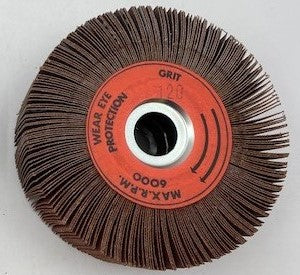
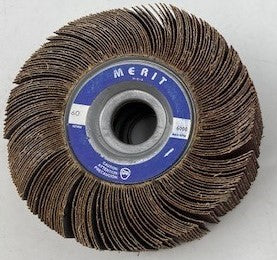
6" X 2" X 1" un-mounted flap wheel with aluminum oxide coated cloth flaps that gently remove material from flat or contoured metal, wood, rubber, fiberglass, or plastic. Maximum speed: 6,000 RPM.
Designed for use on stationary machinery like bench grinders, pedestal grinders, or straight finishing tools with a 1 inch arbor.
Perfect For
-
Contour Sanding: Because the cloth flaps are flexible, they "conform" to the shape of the workpiece. This makes them the gold standard for sanding curved furniture legs, bowls, or molded metal parts.
-
The "Final Prep" Stage: This is the ideal tool when you have already shaped your piece and need a uniform finish.
-
Large Surface Cleaning: The 6-inch diameter provides a large contact area, making it excellent for removing light rust, oxidation, or old paint from metal piping and flat surfaces without gouging the material.
Avoid For
-
Heavy Stock Removal: These are finishing and blending tools. If you need to grind down a thick weld bead or reshape a heavy piece of steel, a solid grinding wheel or a flap disc is much more efficient.
-
Precision Edging: Because the flaps are flexible, they will "round over" sharp corners. If you need to maintain a crisp, 90-degree edge, a flap wheel is the wrong choice.
-
High-Pressure Applications: Pushing too hard against a flap wheel doesn't make it cut faster; it just generates heat and destroys the cloth flaps. These tools work best with light to medium pressure.
FAQ
What is the difference between a "mounted" and "un-mounted" flap wheel, and when should I choose the un-mounted version?
A mounted wheel has a built-in 1/4" shank meant for portable drills or die grinders. An un-mounted wheel, like this 6" model, has a 1" center arbor hole. You choose the un-mounted version when you are working with a stationary bench motor, pedestal grinder, or lathe. Because the tool is stationary, you can use both hands to manipulate the workpiece, giving you far superior control and allowing you to work on much larger projects than a handheld tool could handle.
Can I run this on my high-speed 10,000 RPM angle grinder?
No. The maximum RPM of this product is 6000 RPM. Most standard 6-inch bench grinders run at 3,450 RPM or 1,725 RPM, both of which are fine. Always verify your machine's spindle speed before mounting the wheel to ensure it falls under that 6,000 RPM limit.
How do I know which grit to choose for my project?
If you are dealing with heavy rust or deep scratches in wood, start with a 60 or 80 grit. This will move material quickly but leave a visible scratch pattern. If you are looking to prep metal for paint or want a smooth, 'paint-ready' finish on wood, go with 120 or 180 grit. For fine polishing or blending stainless steel to a satin finish, the 320 grit is your best bet. Remember: flap wheels 'cushion' the cut, so a 120-grit flap wheel often leaves a finer finish than 120-grit sandpaper on a hard block.$